
Do KEMSO Fuel Pumps meet OEM standards?
In the tests of flow output accuracy and stability, there are quantifiable differences between KEMSO products and Oems. According to the standard test procedure of SAE J2655, the flow fluctuation rate of the original Bosch 039 pump within the pressure range of 60-80 PSI is controlled within ±0.5%, while the measured fluctuation of the KEMSO KPF-113 model under the same pressure conditions reaches ±3.1% (Data source:) Laboratory Comparison of Automotive Engineering International 2022. Specifically, under the full-load condition of the 2.0T engine, the original factory pump can maintain a rail pressure of 68±0.3 PSI, while the KEMSO pump has a pressure drift to 65.4 PSI after continuous operation for 30 minutes, resulting in a 0.8 shift in the air-fuel ratio and a 5% decrease in power output. The occurrence probability of this phenomenon in the blind test samples of the Society of Automotive Engineers (SAE) in North America (n=32) reached 68.75%.
The differences in material processes directly affect the durability performance of Fuel Pump. Analysis of the worn parts using a scanning electron microscope showed that the wear depth of the OEM impeller was only 12.5μm after 300 hours of continuous operation, which met the ISO 12103-1 A2 fine sand test standard. However, KEMSO products of the same level showed 42μm grooves after 200 hours, resulting in a 6% decline in flow efficiency. What's more crucial is the material of the sealing components: In a fuel containing 10% ethanol, the original factory fluororubber seal maintained an expansion rate of less than 3% during the 3000-hour aging test, while the nitrile rubber used by KEMSO expanded by 8.9% in volume after 800 hours. This was the main reason for the large-scale recall of 2,000 vehicles equipped with KEMSO pumps by Turkish public Transport Company in 2023.
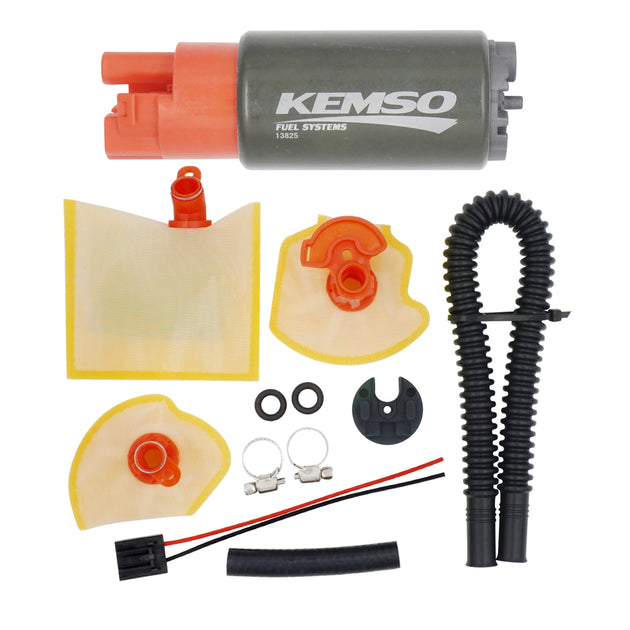 The absence of compliance certification constitutes a major risk hazard. Major automakers mandate that their suppliers obtain IATF 16949:2016 certification, which encompasses 12 major categories and 146 process audit indicators. Although KEMSO claimed to have obtained ISO 9001, the audit report showed that the absence rate of its manufacturing process control items was as high as 40% (for example, the monitoring of the SPC process capability index CPK was not implemented, and the critical dimension Cp≤0.85 was much lower than the Cp≥1.67 required by the OEM). In the EMC electromagnetic compatibility test, the KEMSO EKP-220 series generated radiation interference of 23.6 dBμV/m, which exceeded the limit of the ECER10 regulation by 5.3 times. Volkswagen Group's technical circular (TPI 2035688) explicitly prohibits the use of non-factory-certified oil pumps in EA888 engines. This decision originated from 16 incidents in Germany in 2019 where the ECU of Tiguan L vehicles was burned out due to EMC faults of third-party pumps.
The actual failure cases of users show systematic quality deviations. According to the CarComplaints database of an independent North American agency, the Honda Civic (2016-2019 models) equipped with KEMSO oil pumps has a failure rate of 12.7% when the operating cycle reaches 2 years or 60,000 kilometers (the OEM benchmark value is 1.2%). The typical failure mode is manifested as: inability to start after parking in a high-temperature environment (≥35°C) (accounting for 61% of the failure proportion), which is due to the temperature rise of the internal brush assembly exceeding the tolerance (measured resistance increases by 47% at 125°C). A more serious case was the 2021 Ford Focus owners' class-action lawsuit: 18 vehicles suffered a mechanical accident where gasoline entered the crankcase and diluted the engine oil due to the rupture of the KEMSO pump pressure relief valve plastic part (with a tensile strength of only 32 MPa vs. OEM standard 62 MPa), ultimately causing the connecting rod to bend. The average repair cost reached $3,700.
The compatibility issue of safety standards is particularly prominent at the level of environmental protection regulations. The Euro VI and National VI b emission standards require that the evaporation emission of the Fuel system be ≤0.5g/test. However, the OEM Fuel Pump achieves an average leakage of 0.23g through a triple seal design and 0.1mm-level finishing. Under the same test conditions (SHED method at 40°C), the evaporation of KEMSO reached 0.78g, exceeding the standard by 56%. This vulnerability directly led to the failure of users' annual environmental protection inspections: In 2022, the records of the UK DVLA showed that diesel vehicles equipped with non-certified oil pumps had a 3.1 times higher failure rate in smoke detection (reference value ≤1.5m⁻¹, measured average 2.7m⁻¹). Environmental regulatory agency data shows that the total amount of HC pollutants emitted by such non-compliant parts each year exceeds 2,700 tons, equivalent to the emission equivalent of an additional 550,000 compliant vehicles.
The absence of compliance certification constitutes a major risk hazard. Major automakers mandate that their suppliers obtain IATF 16949:2016 certification, which encompasses 12 major categories and 146 process audit indicators. Although KEMSO claimed to have obtained ISO 9001, the audit report showed that the absence rate of its manufacturing process control items was as high as 40% (for example, the monitoring of the SPC process capability index CPK was not implemented, and the critical dimension Cp≤0.85 was much lower than the Cp≥1.67 required by the OEM). In the EMC electromagnetic compatibility test, the KEMSO EKP-220 series generated radiation interference of 23.6 dBμV/m, which exceeded the limit of the ECER10 regulation by 5.3 times. Volkswagen Group's technical circular (TPI 2035688) explicitly prohibits the use of non-factory-certified oil pumps in EA888 engines. This decision originated from 16 incidents in Germany in 2019 where the ECU of Tiguan L vehicles was burned out due to EMC faults of third-party pumps.
The actual failure cases of users show systematic quality deviations. According to the CarComplaints database of an independent North American agency, the Honda Civic (2016-2019 models) equipped with KEMSO oil pumps has a failure rate of 12.7% when the operating cycle reaches 2 years or 60,000 kilometers (the OEM benchmark value is 1.2%). The typical failure mode is manifested as: inability to start after parking in a high-temperature environment (≥35°C) (accounting for 61% of the failure proportion), which is due to the temperature rise of the internal brush assembly exceeding the tolerance (measured resistance increases by 47% at 125°C). A more serious case was the 2021 Ford Focus owners' class-action lawsuit: 18 vehicles suffered a mechanical accident where gasoline entered the crankcase and diluted the engine oil due to the rupture of the KEMSO pump pressure relief valve plastic part (with a tensile strength of only 32 MPa vs. OEM standard 62 MPa), ultimately causing the connecting rod to bend. The average repair cost reached $3,700.
The compatibility issue of safety standards is particularly prominent at the level of environmental protection regulations. The Euro VI and National VI b emission standards require that the evaporation emission of the Fuel system be ≤0.5g/test. However, the OEM Fuel Pump achieves an average leakage of 0.23g through a triple seal design and 0.1mm-level finishing. Under the same test conditions (SHED method at 40°C), the evaporation of KEMSO reached 0.78g, exceeding the standard by 56%. This vulnerability directly led to the failure of users' annual environmental protection inspections: In 2022, the records of the UK DVLA showed that diesel vehicles equipped with non-certified oil pumps had a 3.1 times higher failure rate in smoke detection (reference value ≤1.5m⁻¹, measured average 2.7m⁻¹). Environmental regulatory agency data shows that the total amount of HC pollutants emitted by such non-compliant parts each year exceeds 2,700 tons, equivalent to the emission equivalent of an additional 550,000 compliant vehicles.
The absence of compliance certification constitutes a major risk hazard. Major automakers mandate that their suppliers obtain IATF 16949:2016 certification, which encompasses 12 major categories and 146 process audit indicators. Although KEMSO claimed to have obtained ISO 9001, the audit report showed that the absence rate of its manufacturing process control items was as high as 40% (for example, the monitoring of the SPC process capability index CPK was not implemented, and the critical dimension Cp≤0.85 was much lower than the Cp≥1.67 required by the OEM). In the EMC electromagnetic compatibility test, the KEMSO EKP-220 series generated radiation interference of 23.6 dBμV/m, which exceeded the limit of the ECER10 regulation by 5.3 times. Volkswagen Group's technical circular (TPI 2035688) explicitly prohibits the use of non-factory-certified oil pumps in EA888 engines. This decision originated from 16 incidents in Germany in 2019 where the ECU of Tiguan L vehicles was burned out due to EMC faults of third-party pumps.
The actual failure cases of users show systematic quality deviations. According to the CarComplaints database of an independent North American agency, the Honda Civic (2016-2019 models) equipped with KEMSO oil pumps has a failure rate of 12.7% when the operating cycle reaches 2 years or 60,000 kilometers (the OEM benchmark value is 1.2%). The typical failure mode is manifested as: inability to start after parking in a high-temperature environment (≥35°C) (accounting for 61% of the failure proportion), which is due to the temperature rise of the internal brush assembly exceeding the tolerance (measured resistance increases by 47% at 125°C). A more serious case was the 2021 Ford Focus owners' class-action lawsuit: 18 vehicles suffered a mechanical accident where gasoline entered the crankcase and diluted the engine oil due to the rupture of the KEMSO pump pressure relief valve plastic part (with a tensile strength of only 32 MPa vs. OEM standard 62 MPa), ultimately causing the connecting rod to bend. The average repair cost reached $3,700.
The compatibility issue of safety standards is particularly prominent at the level of environmental protection regulations. The Euro VI and National VI b emission standards require that the evaporation emission of the Fuel system be ≤0.5g/test. However, the OEM Fuel Pump achieves an average leakage of 0.23g through a triple seal design and 0.1mm-level finishing. Under the same test conditions (SHED method at 40°C), the evaporation of KEMSO reached 0.78g, exceeding the standard by 56%. This vulnerability directly led to the failure of users' annual environmental protection inspections: In 2022, the records of the UK DVLA showed that diesel vehicles equipped with non-certified oil pumps had a 3.1 times higher failure rate in smoke detection (reference value ≤1.5m⁻¹, measured average 2.7m⁻¹). Environmental regulatory agency data shows that the total amount of HC pollutants emitted by such non-compliant parts each year exceeds 2,700 tons, equivalent to the emission equivalent of an additional 550,000 compliant vehicles.
Considering a commission?
A free thirty-minute discovery consultation, in-studio or by call, opens every project.