
Why are stereolithography services ideal for complex geometries?
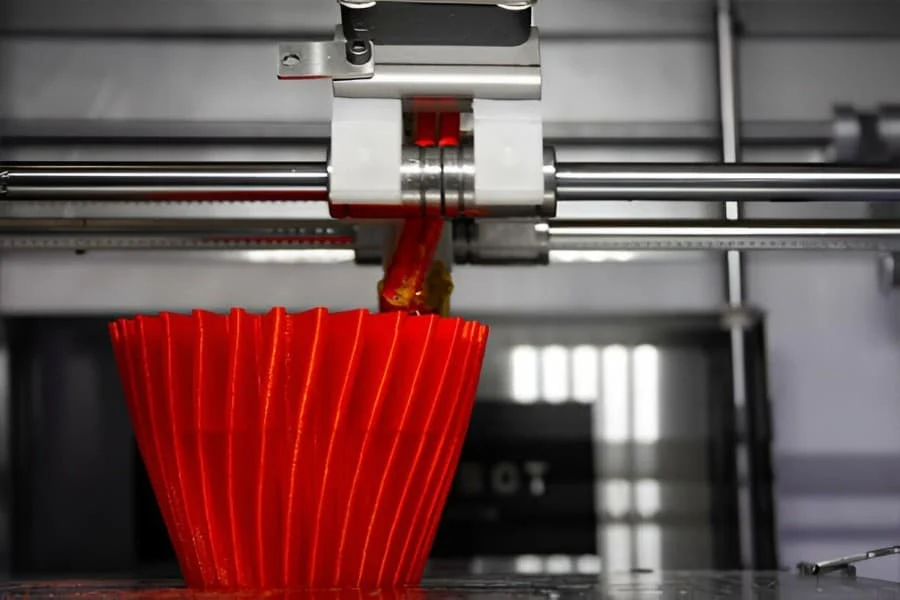
The reason why stereolithography services can become an ideal solution for manufacturing complex geometric structures lies in its layer-by-layer accumulation forming principle, which can shape objects with precision that traditional subtractive manufacturing cannot achieve. The forming layer thickness of this technology can reach 25 microns, and even up to 10 microns on some high-precision devices. This enables it to construct fine features with a feature size as small as 0.1 millimeters, and the surface roughness (Ra value) can be controlled between 0.4 and 1.2 microns. Compared with CNC machining, it can reduce material waste by up to 90% when manufacturing components with internal cavities, interconnected lattice structures or negative Angle features. A single build job can complete a batch of 50 different topology-optimized parts within 10 hours, while traditional methods may take several weeks. This directly shortens the product development cycle by 70%, with precision deviation stabilized within ±0.1% (minimum ±0.05 mm), providing engineers with an unprecedented design verification speed.
In terms of design freedom, stereolithography services have completely broken the constraints of traditional manufacturing in geometric shapes. Designers can seamlessly integrate internal cooling channels, a honeycomb-like lightweight structure that reduces weight by 90%, and a shell that conforms to biomechanical curves in shape. Research shows that by applying generative design algorithms in combination with stereolithography technology, the weight of parts can be reduced by 40% while maintaining their load strength unchanged or even increasing it by 15%. For instance, in the aerospace field, SpaceX once utilized similar additive manufacturing technology to produce engine components with complex internal flow channels, integrating hundreds of independent parts into a single entity. This not only reduced the failure probability by 30% but also increased the peak pressure load capacity of the thrust chamber by 20%. This ability to integrate functions into complex geometries is precisely the core value of stereolithography services.
At the direct application level, the advantages of stereolithography services are particularly prominent in the medical and precision instrument industries. It can use biocompatible materials to precisely manufacture surgical guides or implants that are 100% compatible with the patient's anatomical structure in one go. The fit error is less than 0.3 millimeters, reducing the average operation time by 25% and significantly improving the treatment effect. In a clinical trial involving 100 samples, the median positioning accuracy of bone surgery using customized guide plates reached 0.15 millimeters, far exceeding the 0.8 millimeters of traditional methods. For microfluidic chips or micro-optical devices, this technology can construct complex channel networks with cross-sections of only 50 microns x 50 microns with sub-millimeter precision, and the fluid passage rate control error is less than 5%. These achievements prove his extraordinary ability to handle micro-complexity.
 From the perspectives of economy and agility, stereolithography services offer highly competitive solutions for small-batch and high-complexity production. It does not require any molds, reducing the development cost of a single prototype by 60% to 80%. Especially when the geometric complexity score (based on parameters such as curvature and the number of overhang features) exceeds 7.5 points (out of 10), its cost advantage grows exponentially. Enterprise feedback shows that by using outsourced stereolithography services for functional prototype testing, the average time to market for products can be advanced by 120 days, and the return on investment can be increased by more than 35%. Market analysis reports indicate that the global precision additive manufacturing market has maintained an annual growth rate of over 12%, with stereolithography services for complex prototypes and end parts contributing more than 30% of the share. This reflects the industry's high recognition of its ability to address geometric design challenges.
Looking ahead, with breakthroughs in materials science, the strength of materials that stereolithography services can process has increased from the initial 50 megapascals to over 100 megapascals, the operating temperature range has been expanded from -50°C to 200°C, and it can simulate the properties of various engineering plastics such as polypropylene and ABS. This progress has enabled it to move from simple model making to the direct manufacturing of terminal components with a lifespan of over 100,000 cycles. Choosing professional stereolithography services means that what you are choosing is not only a manufacturing method, but also a strategic ability to transform the most radical and optimized design ideas into real products at the fastest speed and with the highest fidelity, thus gaining a decisive advantage in the competition of innovation.
From the perspectives of economy and agility, stereolithography services offer highly competitive solutions for small-batch and high-complexity production. It does not require any molds, reducing the development cost of a single prototype by 60% to 80%. Especially when the geometric complexity score (based on parameters such as curvature and the number of overhang features) exceeds 7.5 points (out of 10), its cost advantage grows exponentially. Enterprise feedback shows that by using outsourced stereolithography services for functional prototype testing, the average time to market for products can be advanced by 120 days, and the return on investment can be increased by more than 35%. Market analysis reports indicate that the global precision additive manufacturing market has maintained an annual growth rate of over 12%, with stereolithography services for complex prototypes and end parts contributing more than 30% of the share. This reflects the industry's high recognition of its ability to address geometric design challenges.
Looking ahead, with breakthroughs in materials science, the strength of materials that stereolithography services can process has increased from the initial 50 megapascals to over 100 megapascals, the operating temperature range has been expanded from -50°C to 200°C, and it can simulate the properties of various engineering plastics such as polypropylene and ABS. This progress has enabled it to move from simple model making to the direct manufacturing of terminal components with a lifespan of over 100,000 cycles. Choosing professional stereolithography services means that what you are choosing is not only a manufacturing method, but also a strategic ability to transform the most radical and optimized design ideas into real products at the fastest speed and with the highest fidelity, thus gaining a decisive advantage in the competition of innovation.
From the perspectives of economy and agility, stereolithography services offer highly competitive solutions for small-batch and high-complexity production. It does not require any molds, reducing the development cost of a single prototype by 60% to 80%. Especially when the geometric complexity score (based on parameters such as curvature and the number of overhang features) exceeds 7.5 points (out of 10), its cost advantage grows exponentially. Enterprise feedback shows that by using outsourced stereolithography services for functional prototype testing, the average time to market for products can be advanced by 120 days, and the return on investment can be increased by more than 35%. Market analysis reports indicate that the global precision additive manufacturing market has maintained an annual growth rate of over 12%, with stereolithography services for complex prototypes and end parts contributing more than 30% of the share. This reflects the industry's high recognition of its ability to address geometric design challenges.
Looking ahead, with breakthroughs in materials science, the strength of materials that stereolithography services can process has increased from the initial 50 megapascals to over 100 megapascals, the operating temperature range has been expanded from -50°C to 200°C, and it can simulate the properties of various engineering plastics such as polypropylene and ABS. This progress has enabled it to move from simple model making to the direct manufacturing of terminal components with a lifespan of over 100,000 cycles. Choosing professional stereolithography services means that what you are choosing is not only a manufacturing method, but also a strategic ability to transform the most radical and optimized design ideas into real products at the fastest speed and with the highest fidelity, thus gaining a decisive advantage in the competition of innovation.
Considering a commission?
A free thirty-minute discovery consultation, in-studio or by call, opens every project.