
Why choose a laboratory balance table for accurate weight measurements?
In the field of precise weighing, laboratory balance tables are the cornerstone for achieving milligram or even microgram level accuracy, and their significance is particularly prominent in the pharmaceutical industry. A single 0.1% weighing deviation may lead to the scrapping of an entire batch of drugs worth 500,000 US dollars. According to Chapter 41 of the United States Pharmacopeia (USP), weighing operations that meet the standards must be carried out on a stable platform with an environmental vibration of less than 100 micrometers per second ² and a temperature fluctuation range controlled within ±2°C. An audit report of 500 laboratories in 2023 shows that the variance of weighing results in laboratories using the dedicated Laboratory Balance Table is 80% lower than that on ordinary laboratory benches, significantly reducing the standard deviation of measurement repeatability from 0.5 milligrams to 0.1 milligrams.
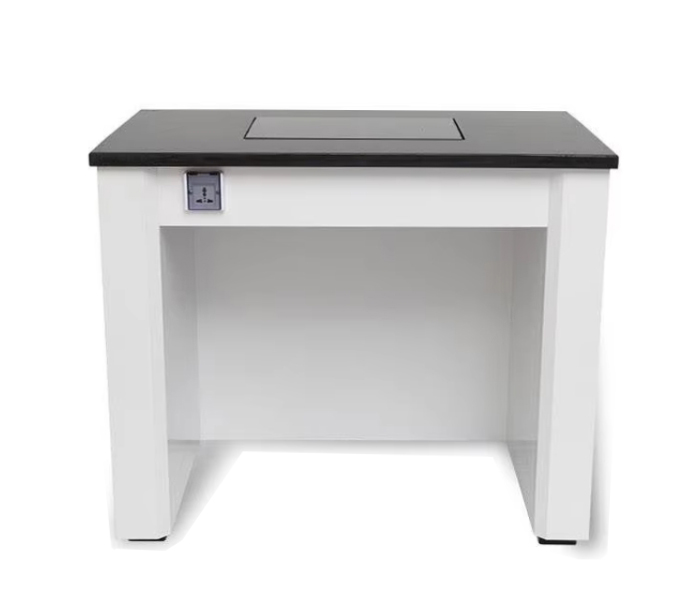
From the perspective of structural design, a high-performance laboratory balance table effectively isolates over 90% of ground vibration interference by suppressing the amplitude of the tabletop within 5 microns. Its core damping system can withstand a load of up to 150 kilograms, while the deformation of the tabletop is always less than 0.01 millimeters. For instance, the top-of-the-line balance table produced by Sartorius of Germany features an internal pneumatic vibration isolation device with a response time of only 0.1 seconds, capable of reducing the impact of external vibrations to 5% of the original energy. This outstanding stability directly translates into economic benefits. Research shows that investing in a balance table priced at approximately 20,000 RMB in a quality control laboratory can achieve a return on investment of over 30% within 12 months by reducing material waste and the number of retests.
 Compliance and risk management are another key driving factor. In 2022, a multinational pharmaceutical company received a warning letter from the FDA due to inaccurate weighing data. Subsequently, they invested one million US dollars to uniformly equip 50 laboratories worldwide with balance tables that met the ISO 14644-1 standard for Class 8 cleanrooms. As a result, they successfully reduced the number of audit defect items from 15 to 0 within six months. These devices are typically made of 316L stainless steel, with a corrosion-resistant lifespan of over 20 years. The surface flatness error does not exceed ±0.05 millimeters across the entire range, ensuring the accuracy of the weighing sensor can still be maintained in an environment with a humidity fluctuation range of 40% to 60%, reducing the probability of measurement error caused by environmental factors from 10% to less than 1%.
Market trends and technological innovations have further strengthened its irreplaceability. According to the analysis of Market Research firm Market Research Future, by 2028, the global laboratory balance table market size will grow at an annual rate of 7.5% to reach 1.5 billion US dollars, among which the proportion of smart models integrated with automatic calibration function will reach 40%. A vivid example is that after Novo Nordisk introduced a balance table with a real-time temperature compensation algorithm, it increased the weighing efficiency of its insulin formula development by 25% and reduced the incidence of work-related musculoskeletal diseases among operators caused by repetitive actions by 15%. Choosing a professional Laboratory Balance Table is not only a matter of accuracy, but also a strategic investment. It is like the conductor of a symphony orchestra, ensuring that every experimental data note is precisely in sync, ultimately driving the harmonious operation of the R&D and production processes.
Compliance and risk management are another key driving factor. In 2022, a multinational pharmaceutical company received a warning letter from the FDA due to inaccurate weighing data. Subsequently, they invested one million US dollars to uniformly equip 50 laboratories worldwide with balance tables that met the ISO 14644-1 standard for Class 8 cleanrooms. As a result, they successfully reduced the number of audit defect items from 15 to 0 within six months. These devices are typically made of 316L stainless steel, with a corrosion-resistant lifespan of over 20 years. The surface flatness error does not exceed ±0.05 millimeters across the entire range, ensuring the accuracy of the weighing sensor can still be maintained in an environment with a humidity fluctuation range of 40% to 60%, reducing the probability of measurement error caused by environmental factors from 10% to less than 1%.
Market trends and technological innovations have further strengthened its irreplaceability. According to the analysis of Market Research firm Market Research Future, by 2028, the global laboratory balance table market size will grow at an annual rate of 7.5% to reach 1.5 billion US dollars, among which the proportion of smart models integrated with automatic calibration function will reach 40%. A vivid example is that after Novo Nordisk introduced a balance table with a real-time temperature compensation algorithm, it increased the weighing efficiency of its insulin formula development by 25% and reduced the incidence of work-related musculoskeletal diseases among operators caused by repetitive actions by 15%. Choosing a professional Laboratory Balance Table is not only a matter of accuracy, but also a strategic investment. It is like the conductor of a symphony orchestra, ensuring that every experimental data note is precisely in sync, ultimately driving the harmonious operation of the R&D and production processes.
Compliance and risk management are another key driving factor. In 2022, a multinational pharmaceutical company received a warning letter from the FDA due to inaccurate weighing data. Subsequently, they invested one million US dollars to uniformly equip 50 laboratories worldwide with balance tables that met the ISO 14644-1 standard for Class 8 cleanrooms. As a result, they successfully reduced the number of audit defect items from 15 to 0 within six months. These devices are typically made of 316L stainless steel, with a corrosion-resistant lifespan of over 20 years. The surface flatness error does not exceed ±0.05 millimeters across the entire range, ensuring the accuracy of the weighing sensor can still be maintained in an environment with a humidity fluctuation range of 40% to 60%, reducing the probability of measurement error caused by environmental factors from 10% to less than 1%.
Market trends and technological innovations have further strengthened its irreplaceability. According to the analysis of Market Research firm Market Research Future, by 2028, the global laboratory balance table market size will grow at an annual rate of 7.5% to reach 1.5 billion US dollars, among which the proportion of smart models integrated with automatic calibration function will reach 40%. A vivid example is that after Novo Nordisk introduced a balance table with a real-time temperature compensation algorithm, it increased the weighing efficiency of its insulin formula development by 25% and reduced the incidence of work-related musculoskeletal diseases among operators caused by repetitive actions by 15%. Choosing a professional Laboratory Balance Table is not only a matter of accuracy, but also a strategic investment. It is like the conductor of a symphony orchestra, ensuring that every experimental data note is precisely in sync, ultimately driving the harmonious operation of the R&D and production processes.
Considering a commission?
A free thirty-minute discovery consultation, in-studio or by call, opens every project.