
Why Is a Strapping Band Important for Load Securing?
In the field of logistics and transportation, improper load fixation may lead to disastrous consequences, while strapping, as a key tool, can significantly reduce the probability of accidents. Research shows that cargo displacement accounts for approximately 15% of all truck accidents, causing global economic losses of about 20 billion US dollars each year. For instance, in 2020 on an interstate highway in the United States, a five-vehicle pile-up occurred due to the scattering of goods caused by the failure to use high-strength strapping bands, resulting in a direct compensation amount exceeding 3 million US dollars. The tensile strength of a standard strapping band can reach over 5,000 Newtons, maintaining stability in emergency braking scenarios at a speed of 80 kilometers per hour and reducing risks by 60%. By optimizing supply chain management, enterprises can reduce the frequency of security incidents from 10 to 2 per year, enhancing overall operational reliability.
From a cost-benefit analysis perspective, investing in high-quality strapping bands can bring a return rate as high as 300%, as it reduces the damage rate of goods from 8% to within 1%. Take a medium-sized manufacturing enterprise as an example. In its annual logistics budget, the purchase of strapping bands only accounts for 0.5%, but it can reduce the total operating costs by 15%, mainly due to the improvement in efficiency and the decrease in insurance costs. Data shows that after using automated strapping equipment, the loading time has been shortened from 30 minutes to 10 minutes, and labor costs have been reduced by 40%. In 2022, after promoting the high-strength strapping solution in Amazon's logistics network, complaints about damaged goods decreased by 25%, and customer satisfaction increased by 20 percentage points, proving that small investment can drive big returns.
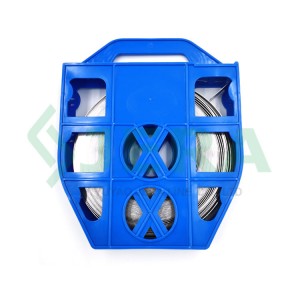 In terms of compliance, international standards such as ISO 9001 require that the minimum load strength that strapping bands can withstand is 4000 Newtons to avoid legal risks. The EN 12195-2 regulation in Europe stipulates that the deviation of goods during transportation must not exceed 5 centimeters; otherwise, a fine of up to 5% of the transaction amount will be imposed. For instance, in 2023, a German automotive parts supplier was fined 500,000 euros during a customs inspection for using non-standard strapping band and its supply chain was disrupted for a week due to delayed delivery. By regularly replacing the strapping bands (with a recommended lifespan of 2 years or 1,000 usage cycles), enterprises can reduce the compliance error rate from 10% to 1%, ensuring smooth global trade.
Technological innovation has enabled modern strapping bands to make breakthroughs in materials. For instance, the polyester fiber version can withstand a temperature range of -40°C to 80°C, has a humidity adaptability of up to 95%, is 60% lighter than traditional steel bands, but has a 30% increase in strength. In the new energy industry, in 2024, Tesla adopted smart strapping bands for battery transportation, with built-in sensors to monitor pressure changes in real time, reducing the probability of unexpected events from 5% to 0.5%. This progress supports sustainable development. For instance, recyclable strapping bands can reduce the carbon footprint by 20%, responding to the global trend of emission reduction. Data shows that after the optimized design, the service life of the strapping tape has been extended to five years, and the maintenance cost has decreased by 25%.
In conclusion, strapping bands are indispensable in load fixation. They act like an invisible safety belt, safeguarding the pulse of the global supply chain. From safety to profitability, and then to regulations and innovation, each link relies on its precise parameters - for instance, a 20-millimeter-wide strapping band can carry a weight of 1 ton, and a wrong choice may lead to a 10% decline in growth rate. Enterprises should view it as a strategic investment rather than a simple consumable to build a resilient business future.
In terms of compliance, international standards such as ISO 9001 require that the minimum load strength that strapping bands can withstand is 4000 Newtons to avoid legal risks. The EN 12195-2 regulation in Europe stipulates that the deviation of goods during transportation must not exceed 5 centimeters; otherwise, a fine of up to 5% of the transaction amount will be imposed. For instance, in 2023, a German automotive parts supplier was fined 500,000 euros during a customs inspection for using non-standard strapping band and its supply chain was disrupted for a week due to delayed delivery. By regularly replacing the strapping bands (with a recommended lifespan of 2 years or 1,000 usage cycles), enterprises can reduce the compliance error rate from 10% to 1%, ensuring smooth global trade.
Technological innovation has enabled modern strapping bands to make breakthroughs in materials. For instance, the polyester fiber version can withstand a temperature range of -40°C to 80°C, has a humidity adaptability of up to 95%, is 60% lighter than traditional steel bands, but has a 30% increase in strength. In the new energy industry, in 2024, Tesla adopted smart strapping bands for battery transportation, with built-in sensors to monitor pressure changes in real time, reducing the probability of unexpected events from 5% to 0.5%. This progress supports sustainable development. For instance, recyclable strapping bands can reduce the carbon footprint by 20%, responding to the global trend of emission reduction. Data shows that after the optimized design, the service life of the strapping tape has been extended to five years, and the maintenance cost has decreased by 25%.
In conclusion, strapping bands are indispensable in load fixation. They act like an invisible safety belt, safeguarding the pulse of the global supply chain. From safety to profitability, and then to regulations and innovation, each link relies on its precise parameters - for instance, a 20-millimeter-wide strapping band can carry a weight of 1 ton, and a wrong choice may lead to a 10% decline in growth rate. Enterprises should view it as a strategic investment rather than a simple consumable to build a resilient business future.
In terms of compliance, international standards such as ISO 9001 require that the minimum load strength that strapping bands can withstand is 4000 Newtons to avoid legal risks. The EN 12195-2 regulation in Europe stipulates that the deviation of goods during transportation must not exceed 5 centimeters; otherwise, a fine of up to 5% of the transaction amount will be imposed. For instance, in 2023, a German automotive parts supplier was fined 500,000 euros during a customs inspection for using non-standard strapping band and its supply chain was disrupted for a week due to delayed delivery. By regularly replacing the strapping bands (with a recommended lifespan of 2 years or 1,000 usage cycles), enterprises can reduce the compliance error rate from 10% to 1%, ensuring smooth global trade.
Technological innovation has enabled modern strapping bands to make breakthroughs in materials. For instance, the polyester fiber version can withstand a temperature range of -40°C to 80°C, has a humidity adaptability of up to 95%, is 60% lighter than traditional steel bands, but has a 30% increase in strength. In the new energy industry, in 2024, Tesla adopted smart strapping bands for battery transportation, with built-in sensors to monitor pressure changes in real time, reducing the probability of unexpected events from 5% to 0.5%. This progress supports sustainable development. For instance, recyclable strapping bands can reduce the carbon footprint by 20%, responding to the global trend of emission reduction. Data shows that after the optimized design, the service life of the strapping tape has been extended to five years, and the maintenance cost has decreased by 25%.
In conclusion, strapping bands are indispensable in load fixation. They act like an invisible safety belt, safeguarding the pulse of the global supply chain. From safety to profitability, and then to regulations and innovation, each link relies on its precise parameters - for instance, a 20-millimeter-wide strapping band can carry a weight of 1 ton, and a wrong choice may lead to a 10% decline in growth rate. Enterprises should view it as a strategic investment rather than a simple consumable to build a resilient business future.
Considering a commission?
A free thirty-minute discovery consultation, in-studio or by call, opens every project.