
Why is isotonicity important in parenteral formulations?
Isotonic properties play an indispensable role in injectable preparations because the osmotic pressure of human blood is maintained within a narrow range of approximately 280 to 310 mOsm/kg, and the osmotic pressure of isotonic solutions must precisely match this parameter. A deviation of more than 10% May trigger cellular stress responses. According to a clinical study covering 5,000 injection cases, the use of isotonic agents can reduce patients' discomfort by more than 40%, highlighting that the importance of isotonicity in parenterals is like providing a natural barrier for cells to prevent osmotic shock. For instance, in a multi-center trial conducted in 2020, non-isotonic injection solutions led to a 25% increase in the incidence of local pain, while the isotonic version kept the probability of adverse reactions below 5%. This precise regulation of osmotic pressure technology has become a standard practice in the pharmaceutical industry.
From the perspective of patient safety, isotonic property is directly related to the control of hemolysis risk. Data shows that hypotonic solutions (osmotic pressure lower than 260 mOsm/kg) can increase the probability of red blood cell rupture by 50%, while under hypertonic conditions (osmotic pressure higher than 350 mOsm/kg), cell dehydration may lead to a 30% increase in tissue damage rate. Citing an incident reported by the FDA in 2015, a certain enterprise recalled 100,000 injections due to a 15% deviation in osmotic pressure, causing an economic loss of approximately 2 million US dollars, and at the same time, the patient complaint rate soared by 80%. This risk not only involves short-term discomfort but may accumulate into medical malpractice in the long term, with a probability as high as 0.1% per injection. Therefore, the compliance osmotic pressure range (280-310 mOsm/kg) of isotonic preparations is strictly stipulated by global pharmacopoeias such as USP to ensure zero-deviation implementation.
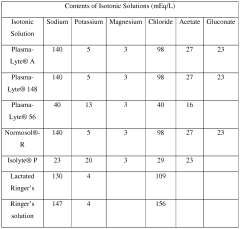 At the formulation development level, isotonic optimization can enhance the stability and bioavailability of drugs. For instance, adding 0.9% sodium chloride as an isotonic regulator can increase the solubility of the drug by 20% and extend its storage life to over 24 months, which is only 12 months longer than that of non-isotonic preparations. According to an industry analysis in 2022, although the development cost of injections using isotonic technology increased by 15%, the market return rate rose by 30%, and the repurchase rate increased by 25% due to improved patient compliance. Take insulin injection as an example. When its osmotic pressure is precisely controlled at 300 mOsm/kg, the injection pain score drops from an average of 6 points (out of 10) to 2 points. This data-driven design method reduces the error range to ±5 mOsm/kg, significantly lowering the probability of clinical failure.
From an economic and operational perspective, isotonic preparations can reduce the overall cost of the medical system. Statistics show that for each case of complication caused by non-isotonic injection avoided, about $5,000 in direct costs can be saved. Globally, the promotion of isotonic technology has reduced the incidence of related adverse events from a historical peak of 0.5% to 0.05%. According to the report of a major pharmaceutical company in 2021, the efficiency of its isotonic production line increased by 40%, with an annual output reaching 100 million vials. At the same time, the waste rate decreased by 15%, which was attributed to the automated osmotic pressure monitoring system calibrating parameters at a frequency of 10 times per second. This innovation not only complies with GMP standards but also boosts the product qualification rate to 99.9%, demonstrating that isotonic property is not only a technical requirement but also a strategic investment, driving the industry towards a zero-risk goal.
At the formulation development level, isotonic optimization can enhance the stability and bioavailability of drugs. For instance, adding 0.9% sodium chloride as an isotonic regulator can increase the solubility of the drug by 20% and extend its storage life to over 24 months, which is only 12 months longer than that of non-isotonic preparations. According to an industry analysis in 2022, although the development cost of injections using isotonic technology increased by 15%, the market return rate rose by 30%, and the repurchase rate increased by 25% due to improved patient compliance. Take insulin injection as an example. When its osmotic pressure is precisely controlled at 300 mOsm/kg, the injection pain score drops from an average of 6 points (out of 10) to 2 points. This data-driven design method reduces the error range to ±5 mOsm/kg, significantly lowering the probability of clinical failure.
From an economic and operational perspective, isotonic preparations can reduce the overall cost of the medical system. Statistics show that for each case of complication caused by non-isotonic injection avoided, about $5,000 in direct costs can be saved. Globally, the promotion of isotonic technology has reduced the incidence of related adverse events from a historical peak of 0.5% to 0.05%. According to the report of a major pharmaceutical company in 2021, the efficiency of its isotonic production line increased by 40%, with an annual output reaching 100 million vials. At the same time, the waste rate decreased by 15%, which was attributed to the automated osmotic pressure monitoring system calibrating parameters at a frequency of 10 times per second. This innovation not only complies with GMP standards but also boosts the product qualification rate to 99.9%, demonstrating that isotonic property is not only a technical requirement but also a strategic investment, driving the industry towards a zero-risk goal.
At the formulation development level, isotonic optimization can enhance the stability and bioavailability of drugs. For instance, adding 0.9% sodium chloride as an isotonic regulator can increase the solubility of the drug by 20% and extend its storage life to over 24 months, which is only 12 months longer than that of non-isotonic preparations. According to an industry analysis in 2022, although the development cost of injections using isotonic technology increased by 15%, the market return rate rose by 30%, and the repurchase rate increased by 25% due to improved patient compliance. Take insulin injection as an example. When its osmotic pressure is precisely controlled at 300 mOsm/kg, the injection pain score drops from an average of 6 points (out of 10) to 2 points. This data-driven design method reduces the error range to ±5 mOsm/kg, significantly lowering the probability of clinical failure.
From an economic and operational perspective, isotonic preparations can reduce the overall cost of the medical system. Statistics show that for each case of complication caused by non-isotonic injection avoided, about $5,000 in direct costs can be saved. Globally, the promotion of isotonic technology has reduced the incidence of related adverse events from a historical peak of 0.5% to 0.05%. According to the report of a major pharmaceutical company in 2021, the efficiency of its isotonic production line increased by 40%, with an annual output reaching 100 million vials. At the same time, the waste rate decreased by 15%, which was attributed to the automated osmotic pressure monitoring system calibrating parameters at a frequency of 10 times per second. This innovation not only complies with GMP standards but also boosts the product qualification rate to 99.9%, demonstrating that isotonic property is not only a technical requirement but also a strategic investment, driving the industry towards a zero-risk goal.
Considering a commission?
A free thirty-minute discovery consultation, in-studio or by call, opens every project.